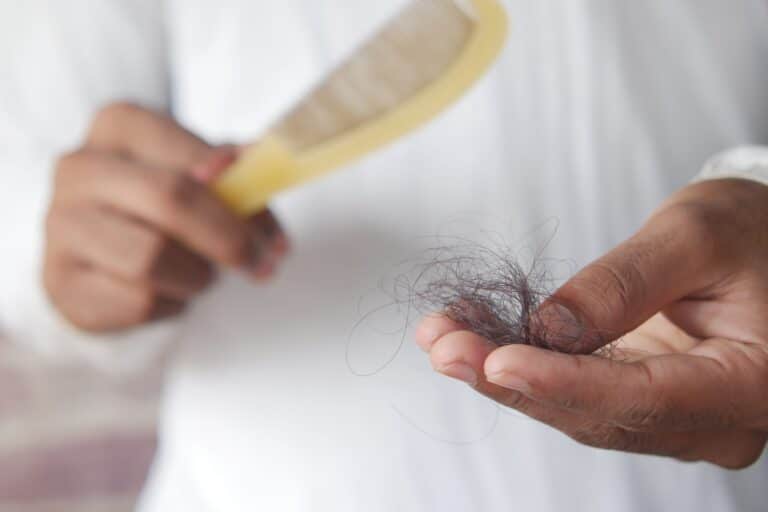
If you’re researching hair restoration, you may be wondering how many grafts for hair transplant procedures are needed to achieve natural-looking coverage. It’s one of the most common questions patients have. The answer depends on several factors, including the extent of hair loss, your donor hair availability, hair characteristics, and your long-term goals.
Understanding the difference between grafts and follicles can help you better evaluate treatment recommendations and set realistic expectations. At Northwest Hair Restoration, Dr. Robert Niedbalski and his experienced team take a personalized approach to treatment planning, carefully assessing each patient’s unique needs before recommending a hair transplant procedure.
Key Takeaways
- A graft is a naturally occurring group of hair follicles transplanted from one area to another.
- The number of grafts needed varies based on the size of the treatment area and desired density.
- Not every patient requires the same graft count, even with similar patterns of hair loss.
- Donor hair quality plays an important role in treatment planning.
- A consultation is the best way to determine an appropriate graft estimate.
What Is a Hair Graft?
A hair graft is a small piece of tissue containing one or more hair follicles. During a hair transplant procedure, grafts are harvested from the donor area, typically the back and sides of the scalp, and transplanted into areas experiencing thinning or baldness.
Many patients assume that one graft equals one hair. In reality, a single graft may contain one, two, three, or even four hairs. This is why providers typically discuss graft counts rather than individual hairs when planning treatment.
What Is a Follicular Unit?
A follicular unit is the naturally occurring group of hairs that grows together from the scalp. Hair transplantation techniques such as Follicular Unit Extraction (FUE) and Follicular Unit Transplantation (FUT) are designed to preserve these natural groupings.
This approach helps create results that mimic natural hair growth patterns. Understanding how many hair follicles can be transplanted often begins with understanding how many follicular units are available within the donor area.
How Many Grafts for Hair Transplant Procedures Are Typically Needed?
The number of grafts required depends largely on the extent of hair loss and the area being treated. While every patient is different, general estimates may include:
- 500 to 1,000 grafts for minor hairline refinement
- 1,000 to 2,000 grafts for moderate thinning
- 2,000 to 3,000 grafts for more extensive frontal restoration
- 3,000 to 4,000+ grafts for larger areas of hair loss
These numbers are only estimates. A thorough consultation is necessary to determine how many grafts for hair transplant treatment may be appropriate for your situation.
What Factors Influence Graft Count Recommendations?
Extent of Hair Loss
Patients with larger treatment areas generally require more grafts. Hairline restoration typically requires fewer grafts than restoring the crown and frontal scalp simultaneously.
Donor Hair Availability
The donor area serves as the source of transplantable hair. The quality, density, and characteristics of donor hair influence how many grafts can safely be harvested.
Hair Characteristics
Hair texture, color contrast, curl pattern, and shaft diameter can affect perceived density. Patients with thicker or curlier hair may achieve excellent cosmetic coverage with fewer grafts than someone with finer hair.
Long-Term Planning
Hair restoration should account for future hair loss patterns whenever possible. Dr. Niedbalski works with patients to create treatment plans that consider both current needs and future goals.
Can You Get a Hair Transplant If You’re Already Bald?
One question many patients ask is can you get hair transplant if completely bald. The answer depends primarily on donor hair availability.
Even when the top of the scalp has little or no remaining hair, some individuals still have sufficient donor hair along the sides and back of the scalp to cover the bald areas. Others may have limited donor reserves that restrict the number of grafts available for transplantation.
Being completely bald does not automatically disqualify someone from treatment. However, candidacy can only be determined through a professional evaluation.
In some cases, patients may need to prioritize certain areas of restoration based on donor supply and treatment goals.
How Many Hair Follicles Can Be Transplanted?
When discussing how many hair follicles can be transplanted, the answer varies significantly from person to person.
Many healthy donor areas contain thousands of follicular units that may potentially be used over one or more procedures. However, preserving donor area appearance remains a critical priority. Harvesting too aggressively can create visible thinning in the donor region.
At Northwest Hair Restoration, graft harvesting is performed by properly qualified and licensed professionals. The goal is to maximize graft quality while maintaining the health and appearance of the donor area.
How Does Northwest Hair Restoration Determine Graft Counts?
Northwest Hair Restoration believes that every treatment plan should be individualized. During your consultation, Dr. Robert Niedbalski evaluates:
- Your pattern of hair loss
- Donor hair density
- Hair characteristics
- Long-term restoration goals
- Overall candidacy for treatment
Northwest Hair Restoration performs FUE by hand rather than relying on robotic or automated devices. Hand-performed FUE allows careful graft selection and handling, which may help support graft quality and survival.
The practice also typically performs one procedure per day, allowing focused attention on each patient throughout the process.
What to Expect During a Hair Transplant Consultation
A consultation provides an opportunity to learn more about your options and receive a personalized graft estimate.
During the appointment, Dr. Niedbalski will examine your scalp, discuss your goals, review donor availability, and explain potential treatment approaches. Patients can ask questions about recovery, expected timelines, and long-term planning.
Northwest Hair Restoration also schedules multiple follow-up appointments after surgery to monitor healing and progress, a level of ongoing support that may not be standard at every clinic.
Serving Patients Throughout Western and Eastern Washington
Northwest Hair Restoration serves patients from throughout the region, including Seattle, Tacoma, Spokane, and surrounding communities.
Surgical hair transplant procedures are performed at the Tacoma clinic. Consultation and follow-up appointments are available in Seattle and Spokane for patient convenience.
Frequently Asked Questions
Are more grafts always better?
No. The appropriate graft count depends on your goals, donor hair supply, and long-term treatment plan. More grafts are not always necessary to achieve a natural-looking result.
Can graft counts be guaranteed before surgery?
No. Estimates are typically provided during consultation, but final graft counts may vary based on donor characteristics and surgical findings.
Will all transplanted hairs grow immediately?
No. Hair transplant results develop gradually over time. Newly transplanted follicles typically progress through normal growth cycles before visible improvement occurs.
Can multiple procedures be performed?
Some patients may be candidates for additional procedures depending on donor availability, treatment goals, and future hair loss patterns.
Request a Consultation
If you’re wondering how many grafts for hair transplant treatment you may need, a professional consultation is the best place to start.
Northwest Hair Restoration provides personalized evaluations for patients throughout Seattle, Tacoma, Spokane, and surrounding communities. Dr. Niedbalski and his team can help you understand your options, determine candidacy, and develop a treatment plan tailored to your goals.
Call now or request a consultation to learn more.