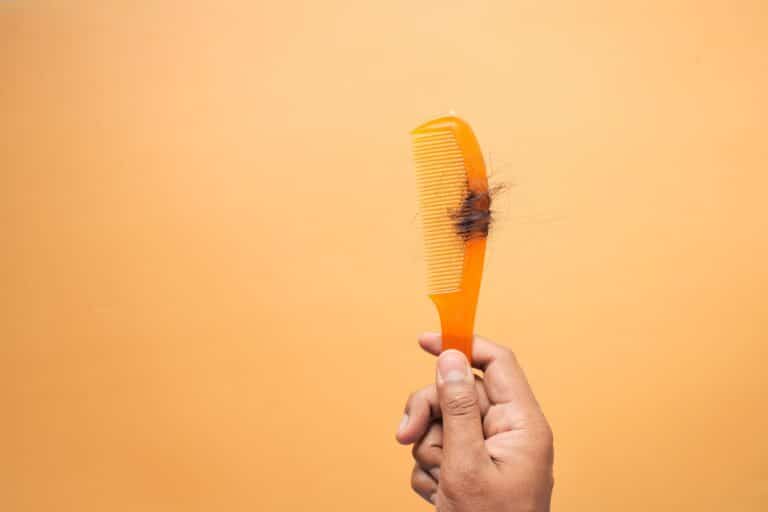
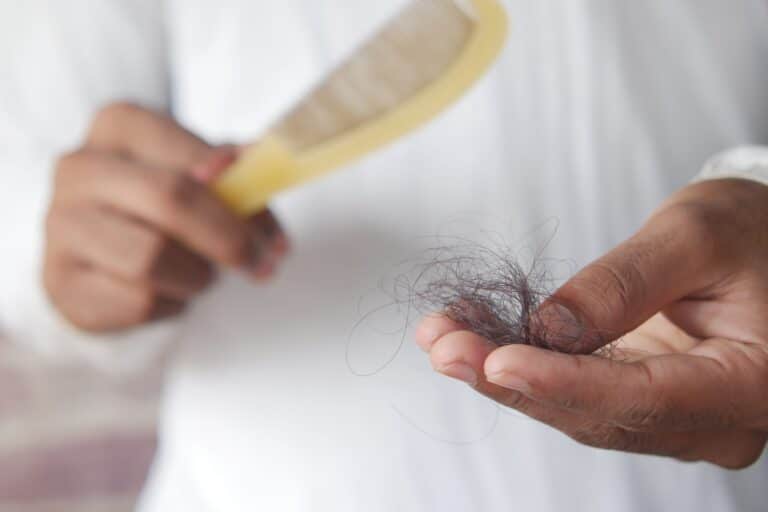
Losing hair is a normal part of life, but sometimes, it can be challenging to tell if it’s just regular daily shedding or a more serious case of hair loss. Here, we will explore the causes of hair loss and hair shedding, how to recognize the signs of more serious hair loss conditions, and the hair restoration treatments available.
Understanding the Anatomy of Hair and The Hair Growth Cycle
Comprehending why hair loss and shedding occurs, first requires an understanding into the basic structure of a hair strand and the cycle of hair growth.
Each hair consists of two parts: the follicle and the hair shaft. The hair follicle sits deep in the skin and is responsible for the growth of hair. It’s a complex structure, comprising of various layers and cells, including the dermal papilla (which plays a key role in hair growth) and the bulb (where hair strands are nourished with blood vessels).
The hair shaft is the visible part of hair that extends above the surface of the skin. It’s made up of a protein called keratin and divided into three layers: the cuticle (outer layer), the cortex (middle layer), and in some cases, the medulla (innermost layer).
When each hair grows, it goes through three distinct stages:
- Anagen “active growing” phase: Where a new hair strand is produced and pushes its way out of the hair follicle. It will continuously grow for several years (in most cases 2 – 6 years). During the anagen phase, rapid cell division occurs in both the hair bulb and dermal papilla.
- Catagen “resting” phase: This is a short, transitional phase that usually lasts for around 2-4 weeks. During this phase, cell division stops and the lower portion of the hair follicle begins to shrink. The hair stops growing but is still present.
- Telogen “shedding” phase: The shedding phase typically lasts for 3-5 weeks. This is where the fully formed hair strand is released and falls out, making way for new hair growth.
At any given time, around 80-90% of our hair is in the growing phase, with the remaining 10-20% in the resting and shedding phases. Translated, this means it is normal to lose around 50-100 hairs per day, as part of the natural hair shedding process. However, a significant increase in the rate of hair loss can be cause for alarm. There are a number of different factors that affect the hair growth cycle, resulting in permanent or temporary hair loss.
Common Causes of Hair Loss
Some common causes of hair loss include:
- Heredity: Genetic factors play a significant role in hair loss, especially in male pattern baldness.
- Hormones: Hormonal changes, such as those experienced in pregnancy, menopause, or thyroid problems can cause hair loss.
- Medical conditions: There are several conditions that can result in temporary and sometimes permanent hair loss, including alopecia areata (an autoimmune disease that develops when your immune system mistakenly attacks the hair follicles, causing patchy hair loss), scalp infections (such as ringworm), and trichotillomania – a hair-pulling disorder.
- Stress: Emotional or physical stress may lead to temporary hair loss.
- Medications: Some medications, especially those used for cancer, depression, blood pressure, and arthritis, can lead to hair loss.
- Poor nutrition and vitamin/mineral deficiencies: A lack of essential nutrients can weaken hair strands and lead to hair loss. A lack of vitamins or minerals, such as an iron deficiency (anemia), can result in hair loss.
- Hairstyles and treatments: Excessive hairstyling, or hairstyles that pull the hair too tight, such as cornrows, braids, or pigtails, can result in hair loss – a condition known as traction alopecia. This is often temporary, but if scarring occurs, hair loss could become permanent. Certain hair treatments may also damage hair or cause it to fall out.
When Should I Be Worried About Hair Loss?
You should be concerned about hair loss if:
- You observe a sudden increase in hair shedding or thinning.
- You find bald patches on the scalp.
- The hairline is receding more than usual.
- The hair loss lasts longer than six months.
- It is causing you emotional distress.
If you’re experiencing symptoms or signs of hair loss or your hair loss is causing you distress, you should consult your healthcare provider to identify the problem and to determine the underlying cause. Sudden or patchy hair loss or losing more hair than usual may indicate an underlying medical condition that requires treatment. Early treatment can help you avoid permanent or more significant hair loss.
Male Pattern Baldness
Male pattern baldness, known as androgenetic alopecia, is the most common cause of hair loss in men. It is a hereditary condition that involves a combination of genetics, hormones, and aging. The hormone dihydrotestosterone (DHT) plays a significant role in male pattern baldness, causing hair follicles to shrink and eventually stop producing new hair.
What Treatments Are Available for Male Pattern Baldness?
Though there’s no cure for male pattern baldness, there are a range of nonsurgical and surgical treatments available that can help to restore hair or reduce further hair loss.
Medications
Over the counter topical treatments can help stimulate hair growth, reduce hair loss, and strengthen existing strands of hair. Although treatment can help, it is unlikely to promote regrowth.
Prescription medications can help slow down further hair loss. In some cases, it can promote hair regrowth, particularly when treatment is started in the early stages of hair loss.
Laser Hair Therapy
Laser hair therapy involves the use of a laser hair growth cap to stimulate hair regrowth. The safe, FDA-cleared treatment uses Low-Level-Laser Therapy (LLLT) to treat male and female pattern hair loss by re-energizing inactive hair follicles, thereby promoting hair regrowth.
Hair Transplant Surgery
A hair transplant is a permanent solution to treating hair loss that offers natural-looking results. The procedure involves the excision of hair follicles from a donor area, typically the side or back of the scalp, and redistributing them to a balding or thinning area of the scalp. Certain factors can influence hair restoration surgery, including hair type, ethnicity, and the type and extent of hair loss; however this type of surgery can restore a receding hairline, enhance overall hair density, and restore the youthful vitality of a previously full head of hair.
There are two different methods used to harvest hair follicles for a hair transplant, including:
- Follicular unit excision (FUE), which involves excising and transplanting individual hair follicles
- Follicular unit transplants (FUT or strip harvesting), where an entire strip of hair from the back of the scalp is used.
Hair Loss Treatment in Tacoma, Seattle, and Spokane, Washington
If you are experiencing hair loss, don’t delay, visit the dedicated team of hair restoration experts at Northwest Hair Restoration. Our team of experienced professionals is here to help you achieve your ongoing goals for thriving, natural-looking hair.
Our dedicated team of professionals will help find a solution for your unique needs. We can educate you about your treatment options and work with you to maintain or restore your hair. We provide a range of effective surgical and nonsurgical treatment options and use the latest advancements in hair transplant surgery, including follicular unit excision (FUE) and ultra-refined follicular unit transplantation (FUT) procedures, facial hair transplants, and more, to help you look and feel your best.
To learn more about our hair restoration services, call us today at (253) 572-2949 or use our convenient online appointment request form.
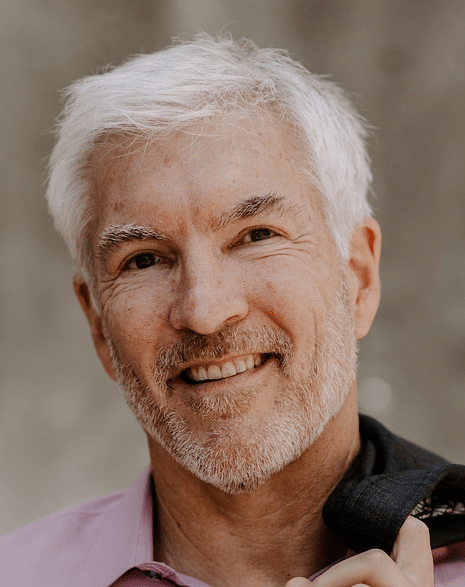
Dr. Robert Niedbalski has been helping patients with hair loss for over 25 years. His practice is dedicated to the very highest level of care and is successful thanks to a combination of attention to patient needs and support for his staff. He and his team at Northwest Hair Restoration serve Tacoma, Seattle, and Spokane.