Non-Surgical Hair Restoration
Key Takeaways
- Non-surgical hair restoration offers a less invasive way to treat hair loss with little to no downtime.
- Treatment options can include medical management, PRP therapy, laser hair therapy, and nutritional support.
- These treatments work best when thinning hair is still present, and the follicles are still active.
- Non-surgical care can also support transplant results by helping preserve the surrounding native hair.
The world of hair restoration has seen a significant rise in the popularity of non-surgical hair restoration treatments.
With advancements in technology and innovative techniques, these non-invasive options, like hair regrowth supplements, are providing solutions for many individuals experiencing hair loss.
These non-surgical hair loss treatments are often chosen by those who prefer a less invasive approach or for whom surgical intervention may not be suitable.
They offer the advantage of minimal downtime and can be a viable option for early-stage hair loss or as a complement to surgical treatments for comprehensive hair restoration.
At Northwest Hair Restoration, Dr. Niedbalski and his dedicated team understand that every individual's journey with hair loss is unique.
That is why we offer a comprehensive suite of non-surgical hair restoration solutions tailored to meet your specific needs.
From medication management to state-of-the-art laser treatments, our goal is to deliver results that enhance your confidence and well-being.
Our approach combines the latest advancements in non-surgical hair restoration with our trademark compassionate care, creating an environment where you feel supported throughout your transformation journey.
Some Non-Surgical Options We Offer
Medical Management for Hair Thinning
Here, we use clinically proven medication management. These treatments, like topical treatments for hair loss, are designed to stabilize hair loss by addressing the underlying hormonal causes, such as DHT, which shrinks hair follicles over time.
In this non-surgical hair restoration approach, we use protocols that are specific to your hair loss pattern to effectively slow down shedding, and in many cases, revitalize miniaturizing follicles to produce thicker, healthier hair strands.
Platelet-Rich Plasma (PRP) Therapy
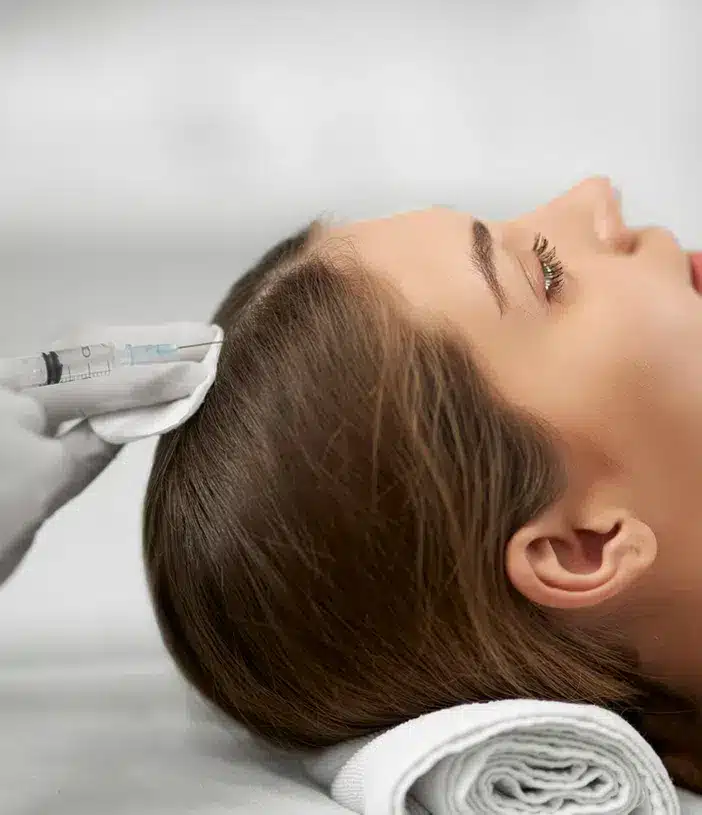
This non-surgical hair loss treatment procedure involves drawing a small amount of the patient’s own blood, processing it to concentrate the platelets, and providing hair regrowth injections directly into the scalp.
These concentrated proteins act as a biostimulator, triggering increased blood flow to the hair bulbs and extending the growth phase of the hair cycle. It is a highly sought-after non-surgical hair restoration option for those looking for a completely natural approach to hair density.
Advanced Laser Hair Therapy
Low-level laser therapy (LLLT) offers a sophisticated, non-invasive way to combat thinning without the use of chemicals or needles.
These treatments deliver therapeutic light energy to the scalp, which is absorbed by the hair follicles to stimulate cellular metabolism.
The process is known as photobiomodulation, and it helps strengthen existing hair and can be used as a standalone treatment or in conjunction with other non-surgical solutions to maximize results.
Nutritional and Supplemental Support
A truly comprehensive non-surgical hair restoration plan considers the body’s internal environment. Nutritional deficiencies can often make hair thinning worse, which is why we offer professional-grade hair regrowth supplements.
Unlike standard over-the-counter vitamins, these medical-grade formulations are specifically engineered with amino acids, minerals, and botanicals that target the mulit-factor causes of hair loss. This ensures that your follicles have the necessary building blocks for sustained growth.
Non-Surgical Solutions as a Complement to Surgery
Non-surgical hair restoration is not only for those avoiding the operating room; it’s an important component for surgical patients as well. While a hair transplant can move hair into bald areas, non-surgical treatments are often used to protect the investment by maintaining the health of the surrounding native hair.
Integrating these therapies into your long-term plan ensures a seamless blend between transplanted and existing hair, which gives you a fuller look for years to come.
Additional Non-Surgical Hair Restoration Services
Whether you are interested in starting medication to boost your hair growth, exploring hair regrowth supplements, or seeking non-medication options that offer a cosmetic enhancement, look no further than assistance from the experienced physician and team members at Northwest Hair Restoration.
Hair Growth Treatments in Tacoma, Seattle & Spokane, WA
There are a number of non-surgical hair restoration options available to our hair loss patients. The important thing is to select the treatment that is right for your unique situation. To find out more, call Dr. Robert Niedbalski at Northwest Hair Restoration of Tacoma, Seattle, and Spokane, Washington, at (253) 572-2949 or request a consultation online using our convenient and secure online form.
Frequently Asked Questions
How do I know if I’m too late for non-surgical treatments?
Non-surgical hair restoration therapies rely on the presence of viable hair follicles. If an area of the scalp is completely smooth and shiny, the follicles have likely miniaturized to the point of dormancy, and a transplant may be necessary. However, if thinning hair is present, treatments like medical management and PRP can often revitalize those follicles.
Will I have to stay on these treatments forever to keep my results?
Yes. With these non-surgical hair loss treatments, if you stop medical management or laser therapy, your hair will eventually return to the state it would have been in had you never started. However, we work with you to find a sustainable, long-term, non-surgical hair restoration maintenance routine that fits your lifestyle.
How does the shedding phase work when starting a new regimen?
Some patients experience a brief increase in shedding when starting medical or laser protocols. But this is a good sign. The treatment is pushing out old, weak hairs to make room for a new, stronger growth cycle. This phase is temporary and typically transitions into thicker growth within 3–6 months.
Can non-surgical hair restoration treatments change the texture of my existing hair?
Yes. Beyond just growing more hair, a primary goal of our nutritional support and photobiomodulation (LLLT) is to increase the shaft diameter of your existing hair. By improving the health of the follicle, the hair produced is often healthier and more resilient, which provides better scalp coverage even before new hairs sprout.
Why choose a physician-led clinic like Northwest Hair Restoration over at-home kits?
The one-size-fits-all approach of over-the-counter kits often fails because it doesn't account for your specific hormonal profile or scalp health. At Northwest Hair Restoration, we provide medical-grade hair regrowth supplements and professional-strength non-surgical hair restoration treatments that are significantly more potent than retail versions. Plus, having a clinical team monitor your progress ensures we can pivot your strategy if your hair loss pattern changes.
Is there any downtime associated with these injections?
One of the biggest draws of our non-surgical suite is the convenience. For example, a PRP session typically allows you to return to work or your daily activities immediately. There are no bandages or incisions; we simply recommend avoiding intense exercise or scalp-irritating chemical treatments (like hair dye) for about 24–48 hours to let the scalp settle.


Request a Consult
Are You a Good Candidate for Hair Transplant Surgery?
Key Takeaways: Eligibility for a hair transplant comes down to a handful of factors, which is why it’s not a blanket yes-or-no. Donor hair density, how stable your hair loss is, your age, and your general health all play into it. That’s why hair transplant requirements can look different from one patient to the next.
Read More
FUT vs. FUE Hair Transplant
Key Takeaways FUT removes and prepares a strip of donor hair, while FUE extracts individual grafts one by one. Both FUE and FUT can yield a high number of grafts. Large FUE cases require the donor hair to be cut very short for harvesting, while FUT does not require donor hair to be cut. One
Read More
Graft Counts and Follicular Units: What to Know
If you’re researching hair restoration, you may be wondering how many grafts for hair transplant procedures are needed to achieve natural-looking coverage. It’s one of the most common questions patients have. The answer depends on several factors, including the extent of hair loss, your donor hair availability, hair characteristics, and your long-term goals. Understanding the
Read More